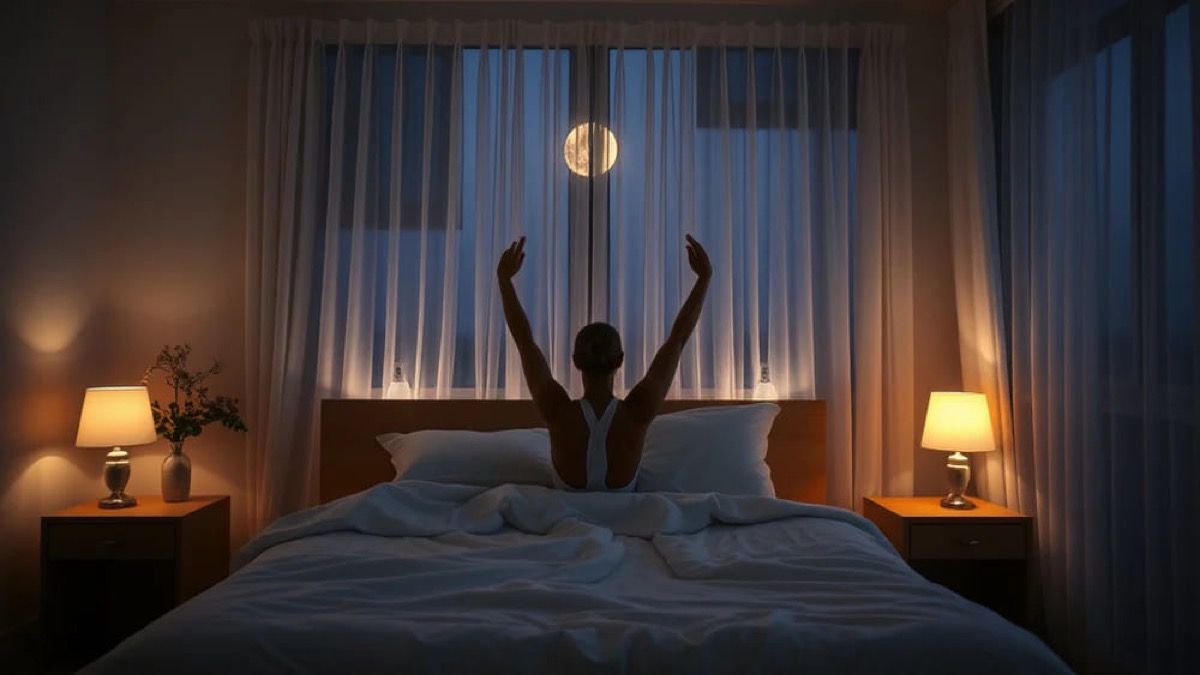
On days when we cannot leave the house and stay locked at our keyboards for hours, our bodies tense up. After these long, sedentary hours, when we finally go to bed at night, even if our minds are tired, the physical tension in our bodies makes it harder to fall asleep. For people who struggle to fall asleep, a light 10-minute exercise routine before bed acts almost like a magic touch.
The Antidote to Sedentary Days: The Importance of Stretching
When we don't go out and sit in the same position all day, our blood circulation slows down. Lactic acid builds up especially in the neck, shoulders and lower back. Instead of heavy, sweaty workouts, gentle pre-sleep stretches dissolve these stiff knots in the muscles.
Stretching activates the body's parasympathetic nervous system (rest and digest mode), slowing the heart rate and signaling calm. This dramatically helps the brain release melatonin, the sleep hormone. These movements are not only a physical release; by lowering stress, they are one of the strongest factors for uninterrupted, deep sleep.
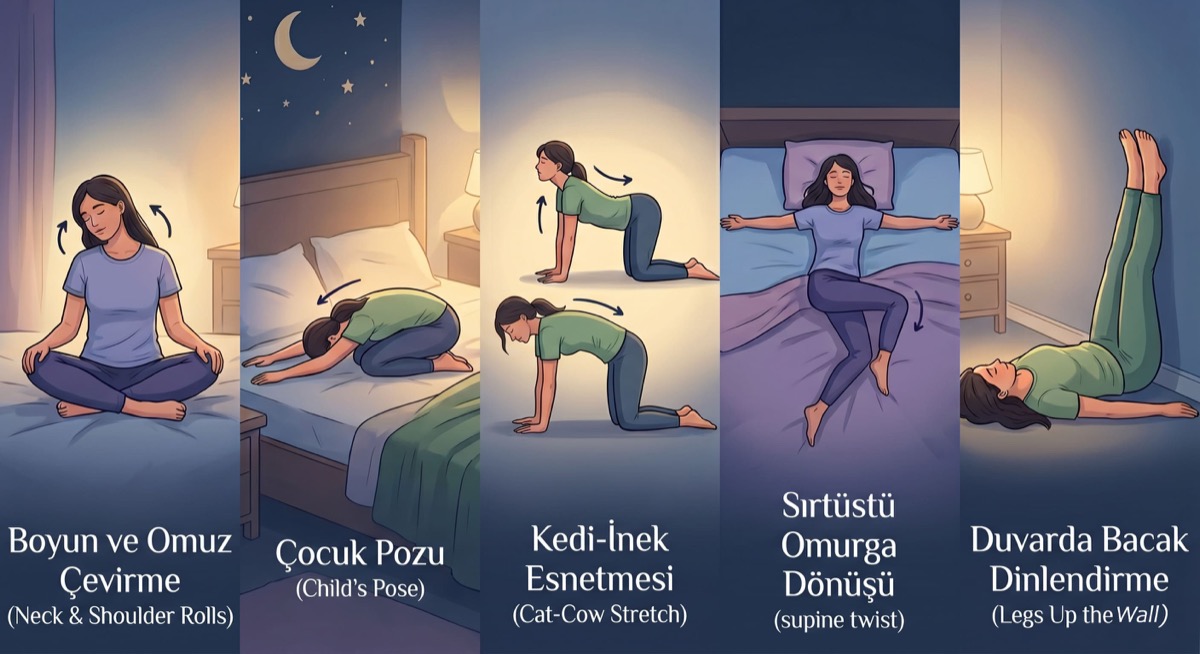
Basic Movements You Can Do Before Sleep
Ventilating your room while doing these movements is a plus. Don't hold your breath, and only stretch to the point where your muscles feel they are relaxing. This small investment will let you wake up the next day far more refreshed, productive and pain-free. Cutting screen time in the last 30 minutes before bed, dimming the lights, and not eating in the last 2 hours all add to the benefit.
5 Essential Exercises
- Neck and Shoulder Rolls: The number-one cure for desk-job stiffness. Slowly pull your shoulders up toward your ears and roll them back. Then very gently tilt your neck to the right and left to release the shoulder roots.
- Child's Pose: Kneel on the floor, slowly fold your torso forward to rest your forehead on the ground and stretch your arms straight ahead. It beautifully extends the spine and lower back that have been crushed in a chair all day.
- Cat-Cow Stretch: On your hands and knees, inhale and arch your back while lifting your head; exhale, round your back and bring your chin toward your chest. Perfect for spinal flexibility.
- Legs-Up-the-Wall: Lie on your back and rest your legs straight up against the wall. On days you don't leave home, this is one of the most effective rest positions to drain leg edema and balance blood flow.
- Supine Twist: Lie on your back and open your arms fully to the sides (T shape). Bend your knees toward your chest, then slowly drop them to the right while turning your head to the left. It opens the chest tightened by leaning toward screens and constant keyboard/mouse use, and resets the deep pressure on the lumbar vertebrae.