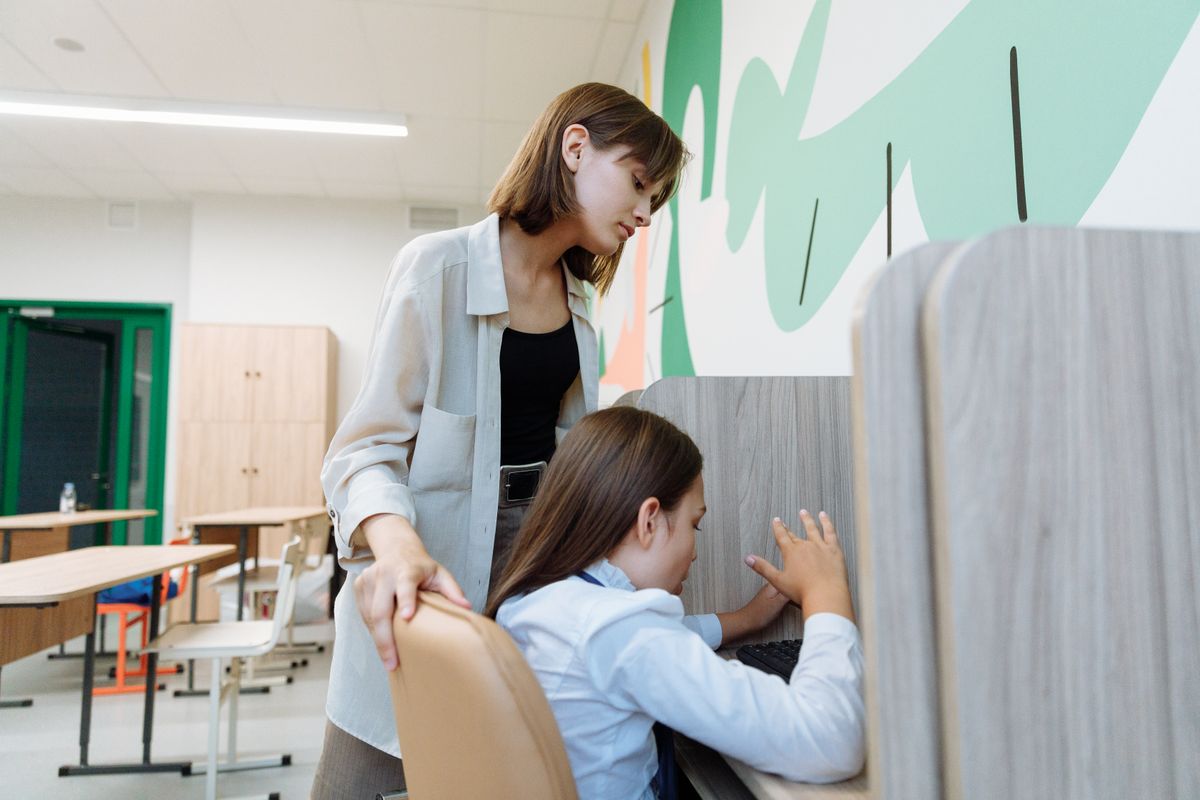
Looking back years later, we rarely remember a course's curriculum — we remember a teacher who "saw" us. That memory isn't sentimental coincidence; it reflects a finding educational psychology has taken increasingly seriously over the last twenty years: the quality of the teacher-student connection can shape academic outcomes as much as the curriculum itself.

Trust Makes It Easier to Take Risks
When a student feels their teacher genuinely values them, it becomes far easier to ask a question in class or risk giving a wrong answer. This isn't just a matter of "feeling good" — neuroscience shows that in a secure social environment, the brain's stress response decreases, freeing up more cognitive resources for working memory and problem-solving. Conversely, when a student has a disconnected or tense relationship with a teacher, part of the brain stays constantly alert to that social threat — which drains the mental energy available for learning.
This connection makes an especially large difference for students who are struggling academically or dealing with behavior issues. A teacher who, instead of labeling a student "difficult" or "lazy," gets curious about the need behind that behavior — maybe a hard time at home, maybe embarrassment over not understanding the material — usually creates far more lasting change than disciplinary punishment. Repeated studies show students working with such teachers have lower absence rates and higher classroom participation.
Small moments — a teacher pronouncing a student's name correctly, asking how their day is going, noticing and naming an achievement — accumulate to build this connection. Curricula change, technology advances, but a child's feeling that "someone sees me" remains the most fundamental ground on which learning actually happens.